Friday, November 27, 2026
← Back to archivePolicy
Policy•STAT News•Nov 27, 2026

Opinion: Montana’s ‘right to try’ law makes patients responsible for bearing costs — and risks
background ▾
- •Montana SB535 is the first state law permitting access to unapproved therapies for non-terminally ill patients through licensed clinics, fundamentally shifting the 'right to try' landscape and creating a potential model for other states
- •The law lacks critical patient protections: no data collection requirements, no value frameworks for pricing, ambiguous insurance liability for complications, and no systematic tracking of patient outcomes or costs—making informed consent nearly impossible
- •Significant risk that companies may abandon FDA approval pathways entirely or that patients may avoid clinical trial enrollment, potentially undermining evidence generation and creating a parallel, unregulated market for experimental treatments
Policy•STAT News•Nov 27, 2026

Pregnancy is the ‘perfect storm’ for eating disorders, but doctors keep missing them
background ▾
- •Eating disorders in pregnancy and postpartum periods are significantly underdiagnosed despite prevalence rates (4.3-9%+) comparable to or exceeding general population lifetime rates, creating documented maternal and fetal health risks
- •No validated screening tools are widely implemented in obstetric practice, and obstetricians receive minimal training on identification and management of perinatal eating disorders
- •Watch for potential development of clinical guidelines, screening protocols, or insurance coverage reforms from NEDA, professional obstetric societies, or payers addressing the identified care gaps
Policy•KFF•Nov 20, 2026
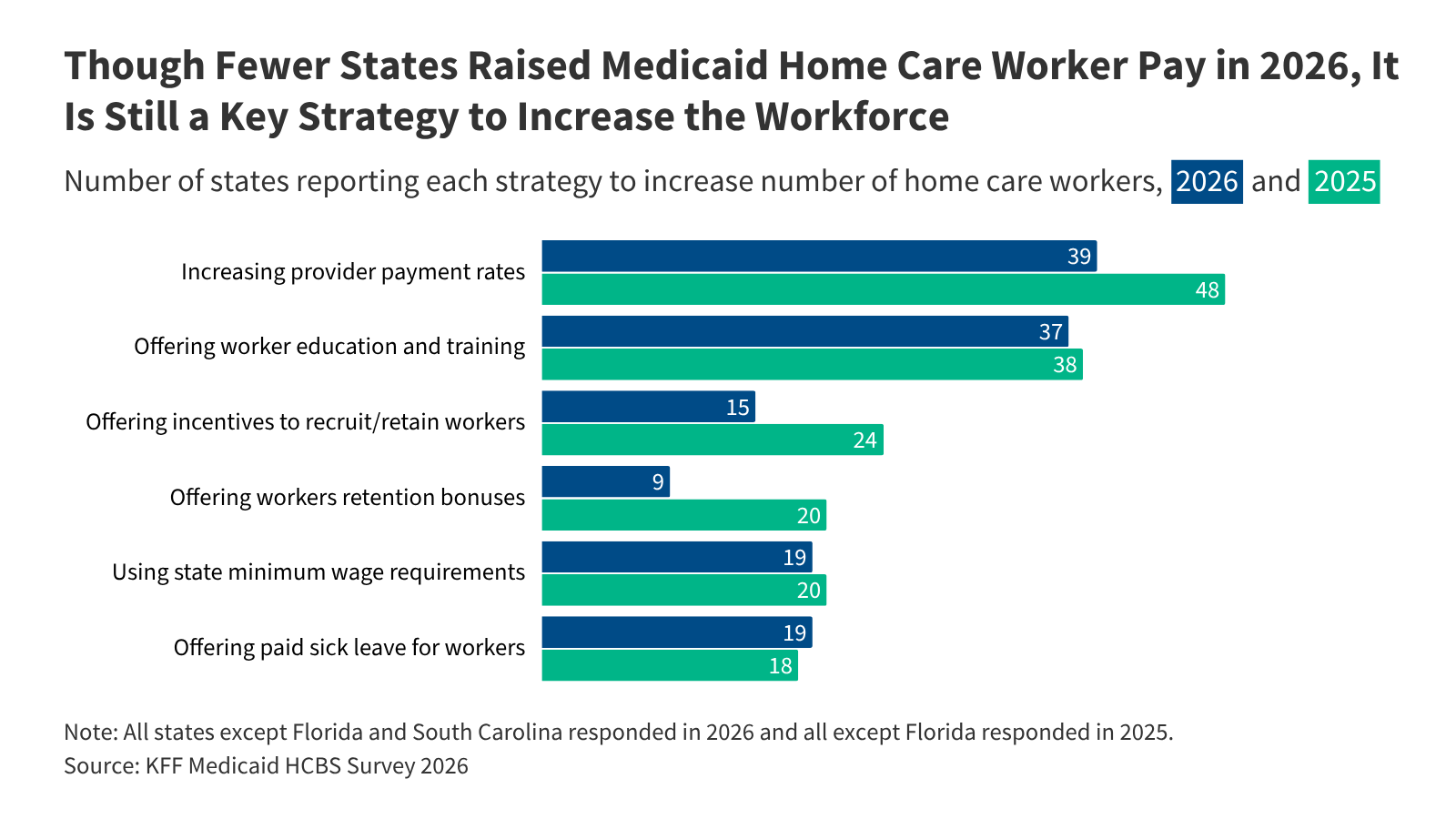
Payment Rates for Medicaid Home Care in 2026
background ▾
- •Fewer states increased payment rates in 2026, reversing a multi-year trend, despite payment rate increases remaining the most common state strategy to address home care workforce shortages
- •Federal policy headwinds—restrictive immigration enforcement, $20+ billion in federal Medicaid cuts, and new CMS rules limiting rate reductions—are creating conflicting directives that may force states into difficult tradeoffs between HCBS access and fiscal sustainability
- •Watch for: state Medicaid budget actions in 2026-2027, CMS clarification on the 4% rate-reduction threshold, and whether immigration policy further shrinks the ~30% immigrant workforce in home care
Market Access
Market Access•Endpoints News•Nov 25, 2026

Bayer goes to Hansoh for ADC deal worth $150M up front
background ▾
- •Bayer-Hansoh partnership valued at $150M upfront for an ADC program demonstrates continued major pharma interest in Chinese biotech assets
- •Pattern of sustained dealmaking in China biotech sector despite broader market volatility suggests confidence in pipeline value and commercial opportunity
BayerHansoh Pharma
→ Read original articleMarket Access•Endpoints News•Nov 24, 2026

Sanofi makes a huge bet on life after Dupixent
background ▾
- •Sanofi is making a deliberate strategic shift away from Dupixent reliance, acknowledging the need to build revenue diversification before major loss of exclusivity
- •Market reacted positively with double-digit share appreciation, suggesting investor confidence in management's forward-looking approach despite near-term revenue headwinds
- •Critical question remains: which pipeline programs will drive post-Dupixent growth and whether Sanofi's R&D productivity can fill the revenue gap
SanofiDupixent (dupilumab)
→ Read original articleClinical Trials
Clinical Trials•STAT News•Nov 26, 2026

In a fertility advance, engineered molecular glue stabilizes chromosomes in aging eggs
background ▾
- •TALhesin proteins successfully stabilize chromosomes in aging eggs by replacing dysfunctional cohesin, reducing premature chromosome separation in mouse models
- •Aneuploidy accounts for approximately 50% of all human conceptions lost before birth and is the leading cause of age-related infertility and failed IVF cycles
- •Clinical translation pathway remains unclear; this represents early-stage basic research with significant regulatory and manufacturing hurdles ahead before potential human application
Max Planck Institute for Multidisciplinary SciencesTALhesins
→ Read original article