Monday, October 26, 2026
← Back to archivePolicy
Policy•STAT News•Oct 26, 2026

The 4 stages of women’s heart health: Experts present new framework
background ▾
- •Four major medical societies have jointly issued a unified cardiovascular care framework for women spanning adolescence through menopause, addressing decades of clinical fragmentation and siloed specialty care
- •The framework identifies perimenopause (ages ~45-51) as a critical cardiovascular inflection point where early risk identification and intervention may reduce long-term disease burden
- •Clinical adoption and integration across obstetrics, pediatrics, cardiology, and primary care will be essential to realize the framework's intended outcomes; real-world implementation barriers and payer support remain to be determined
Policy•STAT News•Oct 26, 2026

Opinion: How bad is healthy supposed to feel?
background ▾
- •This is a medical opinion essay with no direct pharma/biotech industry relevance, containing no drug names, company activities, clinical trials, or healthcare policy developments
Policy•STAT News•Oct 26, 2026

Opinion: Could long-term AI use lead to isolation? We need to find out — but researchers need better access to data
background ▾
- •Current AI industry and regulatory safeguards focus exclusively on acute per-message or per-session harms while ignoring potential cumulative harm from long-term social isolation caused by AI companionship displacing human relationships.
- •AI companies possess aggregate user data necessary to measure displacement effects, but researchers lack access to this data and lack standardized methods to assess cumulative behavioral changes across sessions and over months.
- •Historical precedent from tobacco and social media industries suggests that focusing narrowly on product-level acute-harm safeguards may later serve as legal defenses against cumulative harm liability, creating urgency for proactive measurement and policy frameworks now.
OpenAIMeta
→ Read original articlePolicy•STAT News•Oct 24, 2026

Opinion: Christina Applegate puts a face on one of the most consequential challenges in neurology
background ▾
- •MS diagnostic accuracy remains a critical unmet need; misdiagnosis exposes patients to unnecessary drug toxicity while delaying true diagnosis, whereas delayed MS diagnosis results in irreversible neurological damage despite >20 available therapies that work best when started early
- •Recent advances in diagnostic criteria (McDonald Criteria updates), imaging biomarkers (central vein sign on MRI), and cerebrospinal fluid biomarkers have shortened diagnostic timeframe from years to months, with AI/analytics potentially further improving precision
- •Implementation gap remains: even as diagnostic tools improve, widespread access to MS specialists and health infrastructure investment will be needed to realize clinical benefits
National Multiple Sclerosis SocietyEuropean Committee for Treatment and Research in Multiple Sclerosis
→ Read original articlePolicy•STAT News•Oct 24, 2026

Opinion: STAT readers on Elizabeth Holmes, cancer screening, and more
background ▾
- •This is a letters-to-editor compilation with no substantive pharma industry news, regulatory action, or market impact
TheranosSonora Quest Laboratories
→ Read original articleMarket Access
Market Access•Endpoints News•Oct 23, 2026

Windward Bio files for Nasdaq IPO to fund China-derived assets and in-house R&D
background ▾
- •European biotech with China-derived pipeline pursuing US public markets for capital raise
Windward Bio
→ Read original articleMarket Access•KFF•Oct 22, 2026
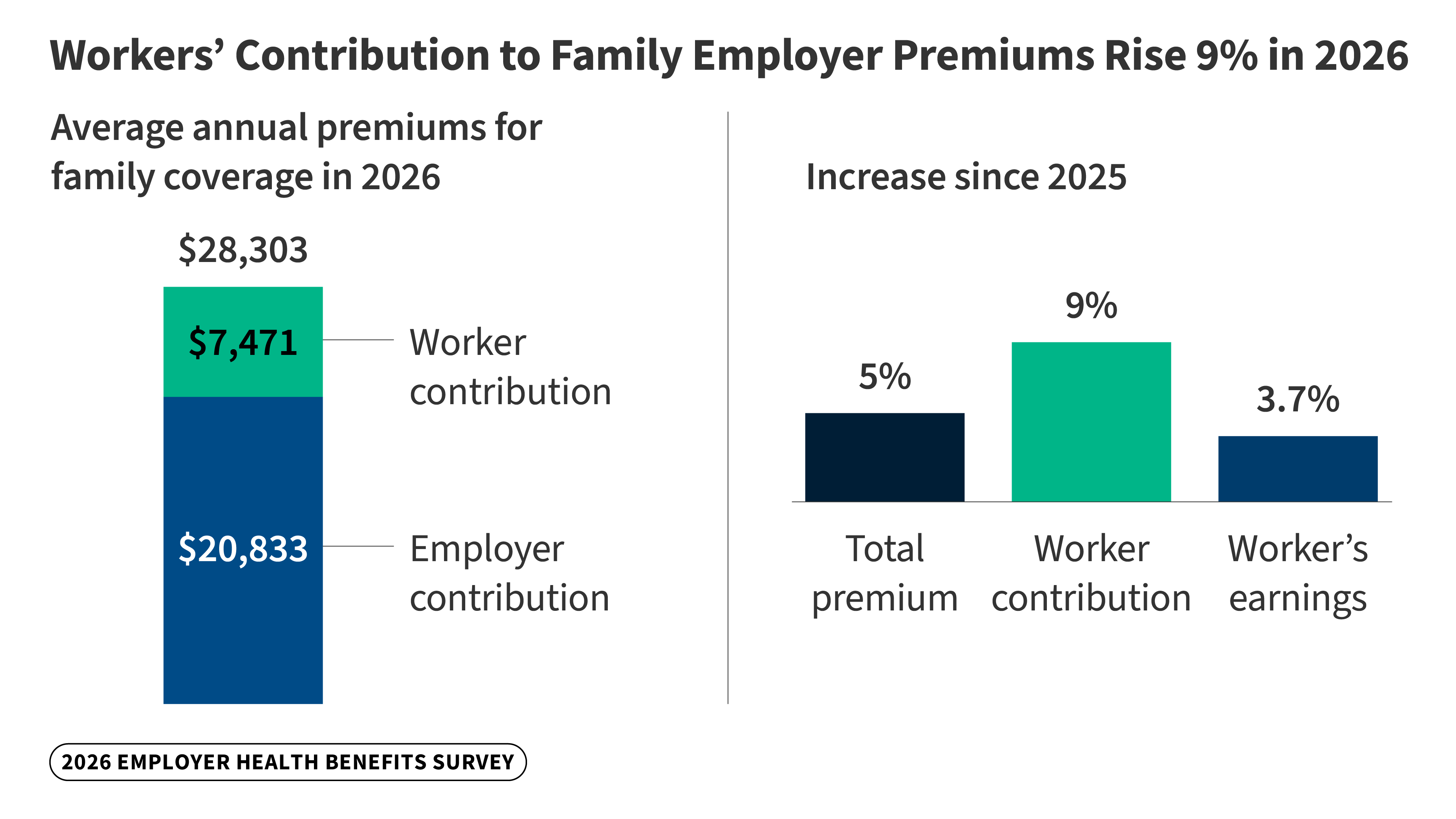
2026 Employer Health Benefits Survey
background ▾
- •Workers' premium contributions and total family health coverage costs are rising substantially faster than wage growth, with family premiums up 28% over five years versus 26.9% wage growth, signaling a structural affordability crisis in employer-sponsored insurance.
- •The survey includes novel questions on GLP-1 agonist and IVF coverage trends, reflecting emerging pharmaceutical demand and employer policy responses that may signal formulary and reimbursement pressures for specialty drugs and high-cost treatments.
- •Monitor how employers respond to cost projections and negotiate formulary restrictions on high-cost therapies like GLP-1 agonists and biologic drugs, as these employer-level decisions directly influence drug access and payer leverage in negotiations.
GLP-1 agonists
→ Read original articleClinical Trials
Clinical Trials•Fierce Biotech•Oct 25, 2026

ESMO: BMS’ Massacesi hails ‘very promising’ data for BioNTech-partnered PD-L1xVEGF-A drug
background ▾
- •Phase 2 ROSETTA Lung-107 demonstrated 36.7% ORR and 90% DCR in treatment-refractory NSCLC patients, with responses across all PD-L1 expression levels, supporting potential to expand beyond PD-1 inhibitor-sensitive populations
- •Safety profile was manageable with 18% grade 3+ pump-related AEs and only grades 1–2 bleeding events (16%), no treatment-related deaths, positioning pumitamig favorably vs. other bispecifics
- •BMS and BioNTech are advancing seven phase 3 trials and 10+ combination studies; pivotal second-line NSCLC trial design and potential label expansion into colorectal and other tumors are critical next milestones
Bristol Myers SquibbBioNTechpumitamigdocetaxel
→ Read original articleClinical Trials•Fierce Biotech•Oct 24, 2026

‘It is what it is’: Merck exec unruffled by ‘unfortunate’ leak of ESMO cancer vaccine data
background ▾
- •Phase 3 primary endpoint achieved: intismeran + Keytruda reduced recurrence/death risk by 42% in melanoma with RFS of 82.2% vs. 70% for Keytruda monotherapy (HR 0.58)
- •Secondary endpoint underwhelming: DMFS benefit of 38% (88.5% vs. 80.2%, HR 0.62) fell short of phase 2 signal, signaling potential regression or trial variability that may complicate regulatory positioning
- •Data leak forced early disclosure two days before ESMO presentation; watch for regulatory pathway (likely BLA filing timeline) and payer reception given the mixed efficacy profile versus hype
Merck & Co.Modernaintismeran autogenepembrolizumab (Keytruda)
→ Read original articleClinical Trials•Fierce Biotech•Oct 24, 2026

ESMO: Lilly touts 79% ADC response rate in competitive ovarian cancer space
background ▾
- •Lilly's Sofe-M demonstrated 79.3% response rate in PSOC with consistent efficacy across FRα expression levels and prior PARP inhibitor exposure, positioning it competitively against AbbVie's Elahere and Genmab's rinatabart sesutecan in phase 3 trials.
- •All leading FRα-ADC programs (Lilly, Genmab, AstraZeneca) use topoisomerase I inhibitor payloads rather than tubulin inhibitors, creating potential for resistance and sequential-use limitations that could make first-to-market status critical.
- •AbbVie's phase 3 PSOC trial (completion April 2026) targets only high FRα expression patients, while Lilly and rivals enroll broader populations—a strategic divergence that will determine market scope and peak sales potential.
Eli LillyAbbVieGenmabsofetabart mipitecanSofe-MElahere
→ Read original articleClinical Trials•Fierce Biotech•Oct 23, 2026

Roche puts numbers behind phase 3 kidney disease win amid blockbuster ambitions
background ▾
- •Sefaxersen met its primary endpoint with clinically meaningful 43.1% proteinuria reduction and robust hematuria resolution rates, with no new safety signals, supporting potential regulatory approval pathway in a large unmet need (IgAN market expected to grow significantly through decade's end)
- •Direct competitive threat from Novartis's already-approved Fabhalta (accelerated approval 2024, full approval July 2026) creates a race to market in factor B inhibition; Roche's monthly injection may offset Fabhalta's oral convenience but must overcome cholesterol concerns associated with competitor
- •Monitor for regulatory interactions between Roche and agencies regarding expedited pathways (breakthrough designation or conditional approval eligibility), continued IMAgINATION trial durability data release timeline, and potential commercial differentiation strategies in what is shaping up as a high-stakes competitive battleground in complement-targeted nephrology
RocheGenentechIonis PharmaceuticalssefaxersenIONIS-FB-LRxFabhalta
→ Read original articleClinical Trials•Fierce Biotech•Oct 25, 2026

ESMO: Roche touts ‘convincing’ phase 3 KRAS data after win over rivals
background ▾
- •Divarasib demonstrated clinically meaningful OS superiority of 5.7 months and PFS advantage of 4.1 months versus first-generation competitors in a head-to-head phase 3 trial, with superior safety (4.8% vs 11.7% discontinuation rate)
- •First-mover competitors Lumakras and Krazati have underperformed commercially ($111M and $55M Q2 sales respectively), creating significant opportunity for a demonstrably superior second-generation agent with peak sales guidance of $1.2-2.5B
- •Watch for regulatory submissions and approvals in 2024-2025; concurrent phase 3 trial combining divarasib with Keytruda in first-line setting will determine whether this becomes a transformative asset versus incremental second-line option
RocheAmgenBristol Myers SquibbdivarasibLumakrasKrazati
→ Read original article