Thursday, October 8, 2026
← Back to archivePolicy
Policy•STAT News•Oct 8, 2026

Opinion: How CMS plans to fix a major flaw in the 340B drug discount program
background ▾
- •340B drug purchases now exceed total Medicare Part B and Medicaid drug spending combined, with off-campus clinics growing from 7,000 (2013) to 34,000+ (2023), creating arbitrage opportunities that distort drug utilization and pricing across the healthcare system.
- •The 2018 ASP-minus-22.5% payment reduction demonstrated that Medicare policy directly influences spending ($3.6 billion swing when reversed), suggesting targeted reimbursement reform could constrain the program's perverse incentives without requiring legislative action.
- •Watch for the specific HHS proposal details and whether CMS will attempt payment rate adjustments, acquisition-cost survey methodology changes, or restrictions on contract pharmacy and off-campus site expansion—and whether the Supreme Court's 2022 procedural ruling will constrain regulatory flexibility.
Department of Health and Human ServicesCenters for Medicare & Medicaid Services
→ Read original articlePolicy•STAT News•Oct 8, 2026

Opinion: England and other nations are on the path toward eliminating hepatitis C. Why not the U.S.?
background ▾
- •England has achieved 80% treatment coverage of hepatitis C infections through opt-out testing in emergency departments, mobile testing vans, and free at-home kits paired with free medications via the National Health Service, reducing virus-related deaths by 36% in a decade.
- •The U.S. reports approximately 70,000 new hepatitis C cases annually (double the CDC target), with only ~50% of Americans with chronic hepatitis C receiving treatment despite availability of >95% curative direct-acting antivirals, indicating a policy and access gap rather than a therapeutic innovation gap.
- •The disparity between U.S. and international progress signals an urgent need for national-level hepatitis C elimination strategy addressing testing infrastructure, medication cost/reimbursement barriers, and systemic healthcare access—an emerging policy priority for public health agencies and payers.
direct-acting antivirals
→ Read original articlePolicy•KFF•Oct 7, 2026

U.S. Foreign Aid Freeze & Dissolution of USAID: Timeline of Events
background ▾
- •USAID dissolution and foreign aid freeze directly threatens U.S. global health infrastructure and pharmaceutical access programs in developing markets
- •Potential disruption to international clinical trial networks, vaccine programs, and infectious disease monitoring that pharma companies and public health rely upon
- •Long-term implications for pharma market access strategies in emerging economies and humanitarian drug donation programs remain to be assessed
Policy•STAT News•Oct 7, 2026

Trump administration proposes $70,000 fee for popular international student work program
background ▾
- •International students and postdocs represent 25% of U.S. life science Ph.D. graduates and 60% of postdocs—populations directly essential to pharmaceutical research and development pipelines
- •The $70,000/$30,000 fee structure, if implemented, would create significant barriers to STEM workforce participation and could trigger brain drain from U.S. biotech and pharmaceutical research institutions
- •Public comment period closes November 9, 2024; NAFSA and academic institutions are mobilizing opposition; this is part of a broader Trump administration effort to restrict international student/scholar visas
Policy•KFF•Oct 7, 2026
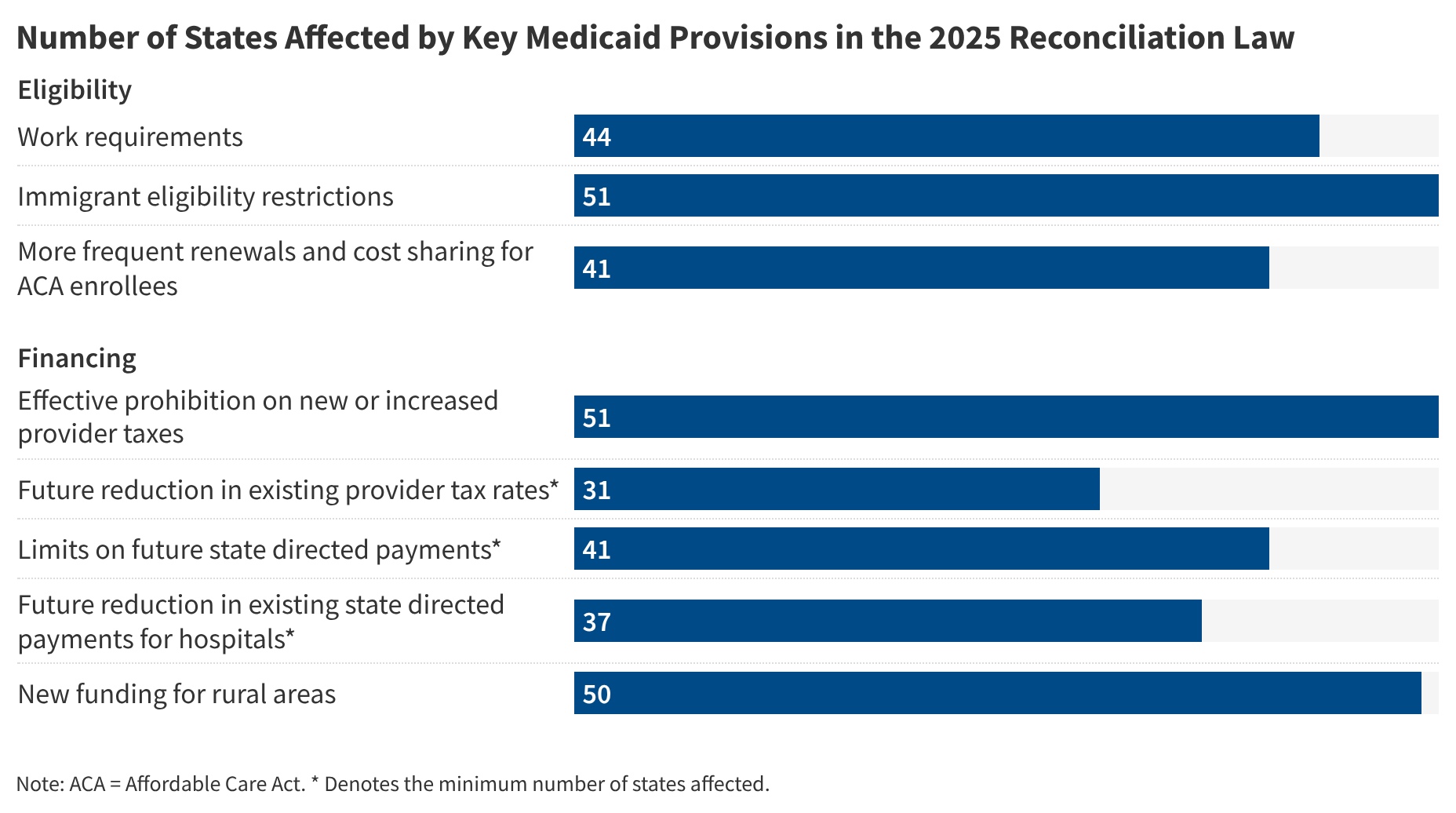
Which States Will Be Affected by Key Medicaid Provisions in the 2025 Reconciliation Law?
background ▾
- •The 2025 reconciliation law will reduce federal Medicaid spending by $911 billion over 10 years and is expected to increase the uninsured by 7.5 million by 2034, with ACA expansion states facing the most severe restrictions.
- •Key eligibility changes include new work requirements, more frequent redeterminations for expansion adults, stricter immigrant eligibility, and reductions in retroactive coverage (2 months for traditional enrollees, 1 month for expansion enrollees).
- •Implementation challenges are amplified by tight state fiscal conditions, declining Medicaid enrollment, and uncertainty around final federal regulations; 36 states with 2026 gubernatorial elections face additional administrative complexity if leadership changes occur.
Market Access
Market Access•Fierce Biotech•Oct 7, 2026

Cadrenal launches strategic review for late-stage cardiology pipeline
background ▾
- •Cadrenal is pursuing a formal strategic process despite recent FDA alignment on CAD-1005 phase 3 trial design, suggesting financial pressures and valuation concerns are outweighing clinical momentum
- •The company claims to have received 'strong interest from potential strategic partners,' indicating there may be near-term bids or partnership proposals in the pipeline
- •This decision mirrors Caribou Biosciences' recent strategic pivot despite similar FDA alignment, suggesting sector-wide biotech funding stress is forcing even FDA-aligned programs into divestiture or partnership processes
Cadrenal TherapeuticsCaribou BiosciencesCAD-1005tecarfarinfrunexian
→ Read original articleMarket Access•Fierce Biotech•Oct 8, 2026

Ono pays $80M for regional rights to trio of Biohaven IgG degraders, including phase 3 Grave’s asset
background ▾
- •BHV-1300 demonstrated complete suppression of disease-causing TSH receptor antibodies in early Graves' disease data and is now in phase 3, representing a potentially differentiated self-administered therapy in a condition lacking modern targeted treatments
- •Ono's $80M upfront commitment signals strong confidence in the IgG degrader mechanism and Biohaven's clinical data, while diversifying Ono's immunology portfolio beyond its existing Shattuck Labs and in-house bispecific programs
- •Monitor BHV-1300 phase 3 trial progress and regulatory timelines in both Western and Asian markets; track whether other major pharma pursue similar regional licensing deals for Biohaven's degrader assets
Ono PharmaceuticalBiohaven PharmaceuticalsShattuck LabsBHV-1300BHV-1310BHV-1320
→ Read original articleMarket Access•Endpoints News•Oct 8, 2026

Roche does fourth China deal since August, teaming with Defand on degraders
background ▾
- •Roche has completed four China deals in five months (since August), demonstrating aggressive market expansion strategy and commitment to capturing emerging market opportunities
- •The ~$1 billion deal structure with milestone-dependent payments suggests significant upside potential tied to clinical/commercial achievements rather than near-term cash outlay
RocheDefand
→ Read original articleMarket Access•KFF•Oct 7, 2026
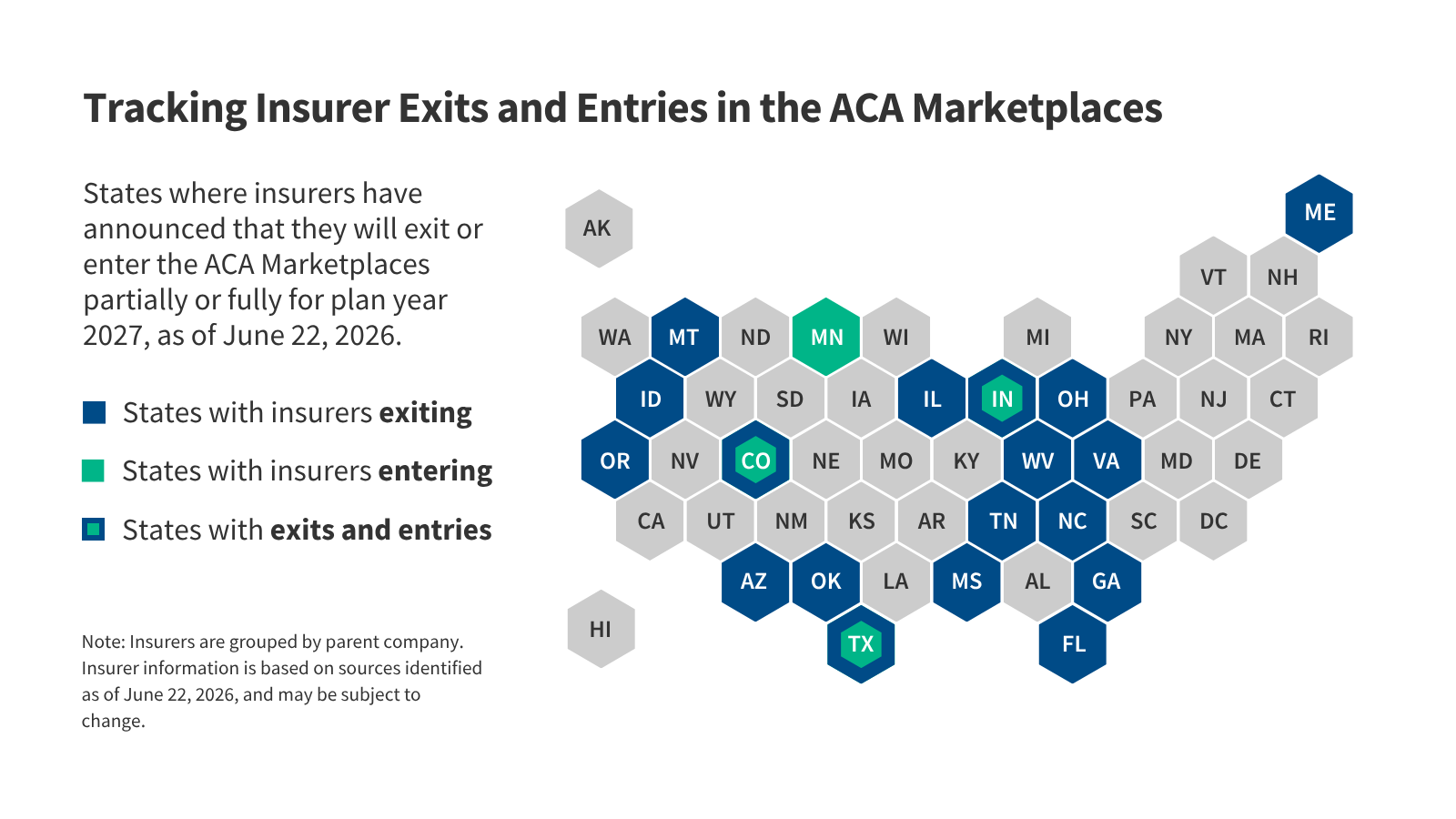
Tracking Insurer Participation Changes in the ACA Marketplaces in 2027
background ▾
- •11 insurers are exiting ACA Marketplace participation in 2027, signaling continued market stress in the individual insurance segment where many specialty and chronic disease medications are accessed.
- •Six new carriers are entering the market, suggesting selective opportunities despite overall competitive challenges.
Market Access•Fierce Biotech•Oct 7, 2026

TCGX launches $600M fund to bankroll Asian biotechs
background ▾
- •TCGX is committing $600M specifically to Asian biotechs, signaling major investor confidence in the region's innovation pipeline as China and broader Asia become cornerstones of global drug discovery
- •The firm's proven track record—including $2.7B Roche/Carmot, $4.1B BMS/RayzeBio, and $1.4B Novartis/Tourmaline deals—establishes credibility for its Asia strategy and may catalyze follow-on capital into the region
TCGXRocheBristol Myers Squibb
→ Read original articleClinical Trials
Clinical Trials•Fierce Biotech•Oct 7, 2026

Cerevance rescues its Parkinson's drug with phase 3 win
background ▾
- •Phase 3 success with 150 mg dose showing 0.61-hour reduction in OFF time and 0.60-hour increase in ON time versus placebo, with benefits visible by Week 2, plus improvements in non-motor symptoms (daytime sleepiness) and daily living scales
- •Redemption narrative following April 2025 phase 2b monotherapy failure, suggesting mechanism validity but highlighting importance of patient population and trial design selection
- •Watch for FDA meeting outcomes and regulatory stance on the prior phase 2b failure; monitor commercial positioning against recently approved tavapadon (AbbVie/Cerevel) and other emerging Parkinson's therapies
CerevanceRoche/GenentechAlectorsolengeprastavapadonlevodopa
→ Read original articleClinical Trials•Fierce Biotech•Oct 7, 2026

Atsena’s Lighthouse gene therapy readout illuminates eye disease efficacy
background ▾
- •67% of patients receiving the phase 3 dose of ATSN-201 met the primary microperimetry response endpoint, compared to 0% of controls, with some patients achieving clinically meaningful improvements in visual acuity from baseline worse than 20/40.
- •Atsena selected the lowest dose for phase 3 based on consistent efficacy and superior tolerability, reducing regulatory and commercial risk.
- •Enrollment completion expected Q1 2025 with phase 3 readout and FDA filing targeted for H1 and end of 2028, respectively—watch for enrollment pace and any safety signals that could delay or derail the program.
Atsena TherapeuticsBain CapitalATSN-201
→ Read original articleClinical Trials•Fierce Biotech•Oct 8, 2026

Argenx digests phase 2 celiac win for $2.2B drug, preps pivotal run
background ▾
- •FB102 met primary Vh:Cd endpoint with p=0.0176 in phase 2 celiac disease trial, demonstrating CD122 inhibition can prevent gluten-induced intestinal damage in a clinically relevant patient population
- •Argenx now positioned to potentially reach market ahead of Teva's TEV-408 given plans for immediate phase 3 initiation versus Teva's additional phase 2 trial; TD Cowen projects 2031 launch for FB102 versus 2034 for TEV-408
- •Watch for phase 3 trial design, recruitment pace, and competitive dynamics with Teva; also monitor FB102 development in vitiligo and alopecia indications as key value drivers to offset efgartigimod pipeline risks
ArgenxForte BiosciencesTevaFB102TEV-408efgartigimod
→ Read original articleClinical Trials•Fierce Biotech•Oct 8, 2026

Zealand, Roche’s ‘intriguing’ weight loss for amylin drug soured by blood sugar data
background ▾
- •Petrelintide achieved 9.2% weight loss at week 28—matching Zupreme-1 and comparable to Eli Lilly's eloralintide in phase 2—but HbA1c reduction of 0.65% significantly underperformed competitors (1.3-2.1% range), narrowing the drug's competitive window.
- •Tolerability remained a key differentiator with discontinuation rates due to GI adverse events near placebo (1.9% vs 1.7%), positioning petrelintide for chronic maintenance use and possibly overweight-only indications rather than as a diabetes-first therapy.
- •Phase 3 enrollment is underway; Zupreme-4 will test 600 overweight/obese Type 2 diabetes patients—critical to determine whether petrelintide can overcome phase 2 efficacy gaps and justify Roche's $1.65 billion acquisition investment.
Zealand PharmaRocheEli LillypetrelintideeloralintideCagriSema
→ Read original articleClinical Trials•STAT News•Oct 8, 2026

Breast cancer can behave differently in older women. This physician is making more tailored treatments a reality
background ▾
- •Older women are dramatically underrepresented in breast cancer clinical trials (9% vs. 47% of diagnoses), creating a critical knowledge gap about drug efficacy and safety in this population
- •Emerging evidence shows breast cancer biology differs significantly in older patients, potentially requiring different treatment strategies rather than uniform age-agnostic approaches
- •Overtreatment of elderly patients remains a documented problem (65% receiving unnecessary sentinel lymph node biopsy despite guideline recommendations against it in women 70+)
Brigham and Women's HospitalJohns HopkinsUniversity of Pittsburgh
→ Read original article