Tuesday, September 29, 2026
← Back to archivePolicy
Policy•Fierce Biotech•Sep 28, 2026

New approach methodologies in safety and toxicology testing: Why proving repeatability is the next hurdle for widespread adoption
background ▾
- •Regulatory agencies (FDA, EMA, ICH) are actively encouraging NAM adoption to replace animal testing, but standardization and repeatability remain the primary barrier to implementation
- •Organoid complexity and interlaboratory variability in culture conditions prevent confident validation of cellular baseline fitness—a prerequisite for reliable toxicology results
- •Real-time functional assays and multiomics analytics represent emerging technological solutions, but industry consensus on standardized verification protocols is still lacking
Agilent TechnologiesFDAEMA
→ Read original articlePolicy•KFF•Sep 29, 2026
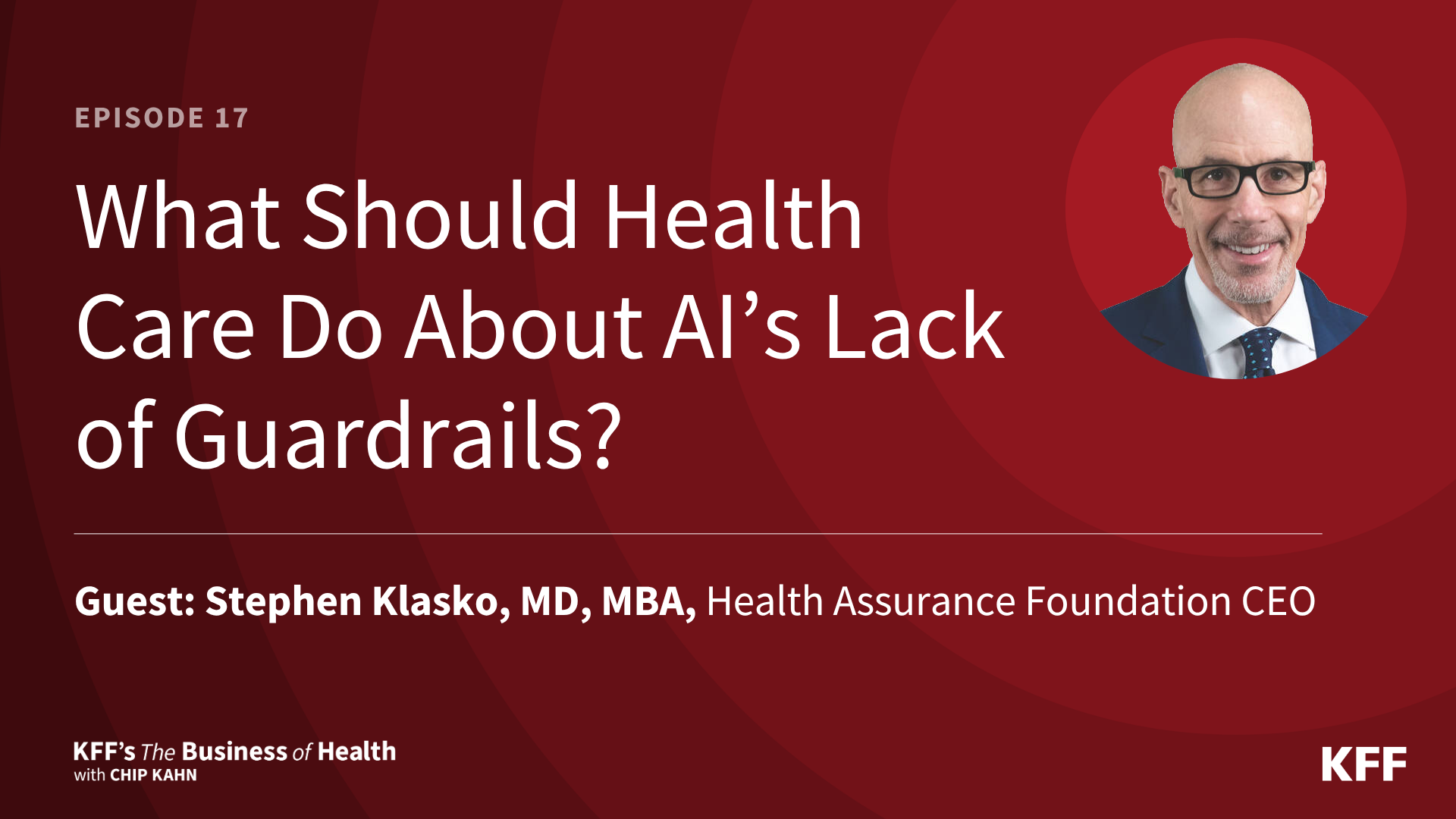
What Should Health Care Do About AI’s Lack of Guardrails?
background ▾
- •AI systems are already deployed in hospital operations for billing, scheduling, and clinical decision-making without comprehensive safety governance frameworks
- •Industry leaders recommend creating dedicated AI safety oversight structures (9/11-style commission, board agendas, 30-minute response protocols) rather than pursuing a broad AI development slowdown
- •Watch for whether major health systems adopt formal AI governance frameworks and whether policymakers pursue sector-specific AI regulation for healthcare
General CatalystHealth Assurance Foundation
→ Read original articlePolicy•STAT News•Sep 29, 2026

Why MAHA wants to make health data much more accessible
background ▾
- •Kennedy and MAHA are explicitly advocating to reduce institutional gatekeeping of health data and expand researcher access to aggregated patient records from multiple sources including federal programs and commercial platforms.
- •Nebraska's partnerships (CDC for vaccine-autism studies, and an unreported NIH partnership for chronic disease research) are being positioned as proof-of-concept for a state-federal hybrid model that could be scaled nationally.
- •Major barriers remain unresolved: patient privacy laws, individual consent requirements, data ownership disputes, and state-level restrictions (e.g., Arizona's prohibition on de-identified data use without provider consent) that may prevent rapid implementation regardless of federal policy intent.
HealthVerityCyncHealth
→ Read original articlePolicy•STAT News•Sep 29, 2026

She’s spent two decades talking to parents who don’t vaccinate their children. Here’s what she’s learned
background ▾
- •This is a sociology opinion piece with no direct implications for pharmaceutical policy, market access, or clinical data—it lacks actionable industry news
Policy•STAT News•Sep 29, 2026

Opinion: Child health is the national security crisis we keep ignoring
background ▾
- •Opinion commentary on public health policy rather than pharmaceutical industry news—no direct clinical, regulatory, or commercial pharma content
Market Access
Market Access•Fierce Biotech•Sep 29, 2026

Novo agrees $2.6B deal for preclinical GLP-1/GIP drug from in-demand Hengrui
background ▾
- •Once-weekly oral GLP-1/GIP candidate represents meaningful differentiation versus available injectable (Zepbound) and daily oral (Viking) competitors in high-value obesity/diabetes market
- •Part of Novo's broader pipeline rejuvenation strategy following leadership restructuring and recent clinical/partnership setbacks; company also signed separate $1.3B deal with Nanexa for long-acting delivery platform
- •Monitor Phase 1 initiation (already approved in China) and early oral bioavailability/tolerability data; assess whether once-weekly dosing can be maintained through clinical development
Novo NordiskHengrui PharmaEli LillyHRS-1596ZepboundGLP-1/GIP dual receptor agonist
→ Read original articleMarket Access•Fierce Biotech•Sep 28, 2026

Tolerance continues thymus-focused deals with $560M pact for Tanabe's clinical-stage IL-33 drug
background ▾
- •Tolerance Bio is rapidly assembling a thymus-focused pipeline via strategic acquisitions—$560M for TLB-33 plus $260M for efineptakin alfa in under a month—positioning IL-33 blockade and IL-7 stimulation as complementary approaches to thymic regeneration.
- •TLB-33 enters development with substantial prior human safety and pharmacology data from Tanabe's five clinical trials (150+ patients), reducing clinical execution risk compared to de novo programs.
- •Tolerance's strategy hinges on upcoming financing to fund phase 2 programs for both assets; monitor 2025 funding announcements and early phase 2 data readouts for TLB-33 as proof-of-concept for thymic preservation claims.
Tolerance BioTanabe PharmaNeoImmuneTechTLB-33 (MT-2990)efineptakin alfa
→ Read original articleMarket Access•Fierce Biotech•Sep 29, 2026

AstraZeneca scales Summit’s PD-1xVEGF strategy with $2B investment to fuel ADC combos
background ▾
- •AstraZeneca's $2B investment validates ivonescimab's potential and commits major global oncology R&D expertise to resolve critical translation concerns from China to global markets, particularly ahead of HARMONi-3 results.
- •The ivonescimab-ADC combination strategy leverages the structural advantage of bispecifics for easier multi-drug combinations, positioning AstraZeneca to explore synergies across its broad ADC portfolio in multiple tumor types.
- •Watch for HARMONi-3 global phase 3 lung cancer data readout and early signals from ivonescimab-sone-ve gastrointestinal cancer trials; AstraZeneca's retained optionality and lack of ROFR suggests Summit remains open to competing partnerships if data underperform.
AstraZenecaSummit TherapeuticsKYM Biosciencesivonescimabsonesitatug vedotin
→ Read original articleMarket Access•Endpoints News•Sep 28, 2026

AstraZeneca buys a $2B stake in Summit, taking equity in bet on cancer drug
background ▾
- •AstraZeneca commits $2 billion equity investment in Summit Therapeutics, signaling confidence in Summit's cancer portfolio
- •Strategic equity stake represents a middle ground between full acquisition and traditional partnership, allowing AstraZeneca portfolio expansion while maintaining Summit's autonomy
- •Watch for details on which cancer programs are prioritized and any future acquisition triggers or governance changes
AstraZenecaSummit Therapeutics
→ Read original articleMarket Access•Fierce Biotech•Sep 28, 2026

Precision Neuroscience taps $250M in Series D funding for brain-computer interface
background ▾
- •Precision Neuroscience achieved FDA 510(k) clearance for Layer 7 (March 2025) and is now raising capital to advance toward predicate or de novo pathways for permanent implants and expanded indications
- •The company has de facto clinical leadership with 100+ procedures and a 18-site network, critical defensibility factors in a nascent market where clinical evidence and physician relationships drive adoption
- •China's first commercial BCI approval (Neuracle Technology for spinal cord injury) establishes a regulatory precedent outside the US and signals potential market fragmentation; watch for US regulatory timelines and head-to-head clinical comparisons
Precision NeuroscienceMedtronicNeuracle TechnologyLayer 7 cortical interface
→ Read original articleClinical Trials
Clinical Trials•Fierce Biotech•Sep 28, 2026

Mirum posts phase 3 hepatitis win for ‘commercially differentiated’ challenger to Gilead, Vir
background ▾
- •Brelovitug's 56% primary endpoint response rate (300-mg dose) exceeds Gilead's Hepcludex approval benchmark of 48%, with improved safety profile and enrollment of more severe patients than Vir's competing regimen
- •Phase 2b→phase 3 improvements in response rates and sustained Week 48 gains suggest durability and de-risking for NDA submission contingent on Azure-4 success in Q4 2024
- •Watch for Azure-4 readout in Q4 2024 and Mirum's NDA filing trajectory; market dynamics will depend on comparative real-world efficacy, dosing convenience, and payer coverage decisions across three HDV agents
Mirum PharmaceuticalsGilead SciencesVir BiotechnologybrelovitugHepcludexglenvokumab
→ Read original articleClinical Trials•Fierce Biotech•Sep 28, 2026

Kodiak's stock doubles as resurrected eye disease drug matches Eylea in phase 3
background ▾
- •Tarcocimab matched aflibercept on primary endpoint in wAMD with substantially extended dosing intervals (24-week majority vs. 8-week standard), supporting a clinically meaningful advantage in durability despite non-inferiority design.
- •Safety profile improved markedly with numerically lower cataract incidence compared to aflibercept, resolving the unexpected cataract signal that derailed the program in 2023 and validating the restart strategy.
- •FDA approval pathway now clear for Q4 filing, but market penetration uncertain given expired aflibercept patents enabling biosimilar competition (Yesafili) alongside branded rivals (Eylea HD, Vabysmo), potentially limiting premium pricing despite durability claims.
Kodiak SciencesRegeneronBiocontarcocimab tedromertabirafusp alfa tedromeraflibercept
→ Read original articleClinical Trials•Fierce Biotech•Sep 28, 2026

Roche drops muscle-sparing obesity antibody after flunked interim analysis
background ▾
- •Emugrobart failed its phase 2 interim analysis for obesity when used as an adjunct to GLP-1 agonists, suggesting the myostatin-inhibition approach may not adequately preserve muscle mass during pharmacologic weight loss.
- •Chugai plans to pursue phase 3 development in spinal muscular atrophy based on safety and preliminary efficacy data, shifting the asset's strategic focus away from obesity to rare genetic diseases.
- •Watch for Chugai's ability to secure out-licensing partnerships and whether other myostatin inhibitors (AstraZeneca, Biohaven, Wave Life Sciences) advance successfully in obesity, potentially validating or invalidating the target class.
RocheChugaiEli Lillyemugrobarttirzepatidesemaglutide
→ Read original articleClinical Trials•Endpoints News•Sep 28, 2026

Adicet Bio shares promising look at CAR-T for lupus, but stock drops anyway
background ▾
- •Adicet's off-the-shelf CAR-T demonstrated clinical benefit in lupus—an indication where cell therapies remain largely unproven and represent a significant unmet need
- •Stock decline despite positive data signals market skepticism about differentiation, manufacturing scalability, or reimbursement prospects for the candidate
- •Watch for Phase 2 trial initiation, competitor data from other CAR-T or cell therapy programs in autoimmune disease, and commercial partnerships that could validate the approach
Adicet BioAdicet CAR-T (lupus)
→ Read original article